

19 Fascinating Ruins in Mexico You Need to Visit



Post may contain affiliate links. Read my Disclosure & Privacy policies for more details.
Are you eager to explore some of the archaeological sites and ruins in Mexico? Check out the best ruins in Mexico to help you decide which sites warrant a spot on your itinerary.
It is best to find a hotel in Playa del Carmen and avoid the hotel zone in Cancun if you plan to visit multiple Mayan Ruins in Mexico.
Mexico was home to many fascinating pre-Columbian civilizations, and many of them left behind incredible ruins that are now open to the public.
There are thousands of archaeological sites within Mexico, and nearly 200 are open to visitors.
Some of the most popular ruins in Mexico, sites like Chichen Itza and Teotihuacan, welcome millions of visitors each year.
But Mexico is also host to a plethora of lesser-known but equally impressive sites that are not nearly as crowded. Wherever your Mexico travels take you, there’s bound to be an ancient ruin nearby!
If you’re fascinated by Mesoamerica and eager to learn about pre-Columbian cultures, it’s essential to include visiting one or several of these sites in your Mexico bucket list.
Hopefully, this extensive (yet nowhere-near-exhaustive) list will inspire you to learn about some of Mexico’s ancient civilizations.

Quick Tips for Visiting Archaeological Sites in Mexico
Before we dive into learning about all the different ruins in Mexico, here are some general tips to help your visit go more smoothly.
- Go with a guide: Most Mexican archaeological sites offer no form of interpretive signage.
Unless you’re already familiar with the site’s history, you’ll end up feeling like you’re staring at a bunch of old rocks. …which you are… However, the ruins become much more engaging when an expert explains who constructed them and their purpose. Investing in a guide is well worth it.
The most famous ruins have guides for hire on-site, but smaller ones may not. In my experience, guides usually speak both English and Spanish. Scheduling a comprehensive tour of Mexico’s ruins is a highly recommended option.
It streamlines the transportation process. Viator and Get Your Guide are my two favorite companies for booking tours.
- Rent a car: Unless you visit with a tour group, the logistics of getting to many of Mexico’s ruins can be complex. Renting a car provides you with complete schedule flexibility and facilitates access to lesser-known destinations.
My favorite car rental organization is Booking.com– they search across several providers to find you the most competitive rates.
- Bring water: Most of these archaeological sites are large and require a lot of walking. You’ll be able to find bottled water on-site, but it’s always easier to show up prepared so you don’t have to waste time on a water detour or pay inflated prices.
Carry a refillable bottle and purchase more along the way if necessary.
- Wear comfortable shoes: Again, many of these sites are large, and you’ll do a lot of walking (and possibly even climbing the structures). You’ll have more fun if your feet are comfortable.
I recommend a pair of lightweight, breathable running shoes like these that I wear.
- Carry cash: Mexico has a cash-based economy, which holds true at the ruins. If you plan to hire a guide, buy souvenirs or snacks, or tip your guide, it’s beneficial to have a few small bills with you. You may be able to find an ATM on-site, but it’s best to come prepared.
- Bring sun protection: Most times, exploring Mexico’s archaeological sites involves prolonged sun exposure. Ensure you carry this type of biodegradable sunscreen, a hat, and a sun cover-up to prevent burns.
Read more about the recommended packing list for traveling to Mexico.
- Bring bug repellent: This advice isn’t necessary at arid sites like Teotihuacan, but for ruins in Mexico, specifically in the jungle, like Palenque or Tajín, bug repellent will substantially improve your quality of life.
- Sundays are free for locals: All of Mexico’s ruins are free for Mexican residents and Mexican citizens on Sundays, so prepare for crowds. If you are a resident or citizen, bring your INE card to receive free admission on Sundays.
- Sites may be closed on Mondays: Many of Mexico’s attractions are closed on Mondays, including archaeological sites.
- A note on cameras: This tip applies on a case-by-case basis, but you’ll appreciate having a heads-up. If your camera appears to be “professional,” you may be forced to pay a fee to enter with it.
I encountered this at Chichen Itza with my GoPro– it was on a selfie stick, which made it seem professional, and I had to pay 100 pesos extra to take it in with me. If you have a professional-looking camera, just stash it in your backpack before heading in to avoid this additional charge.
- Don’t expect to climb on the ruins: It’s fun, but having thousands (or even millions) of visitors climbing all over Mexico’s ancient ruins is really detrimental to their physical integrity.
There are a few sites where you can ascend the pyramids (Cobá, Teotihuacan), but many do not allow this. Regardless of your location, remember that experts have painstakingly excavated and restored these ruins, which date back thousands of years.
Ruins in Mexico Map
I’ve plotted each archaeological zone mentioned in this article on the map below. Use it to find the locations of Mexico ruins near you!
The Best Ruins in Mexico

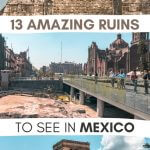
1. Templo Mayor, Mexico City
Sitting right on Mexico City’s Zócalo, Templo Mayor was once the main temple of the Mexica kingdom of Tenochtitlan. It is one of many fascinating sites in Mexico City’s Centro Historico.
This site is particularly striking because you can view the impressive ruins and the colonial buildings of the zocalo at the same time. This contrast serves as a sharp reminder of the weight of colonialism.
The Spanish literally dismantled parts of the temple and used the same stones to build a church (the Metropolitan Cathedral) right on top of it. It’s haunting.
There is a museum (Museo del Templo Mayor) adjacent to the cathedral where you can tour the excavated portion of the ruin and browse a collection of Mesoamerican artifacts.
You can view part of the excavated ruins without paying for entrance to the museum, but going inside will help you learn more about what you’re looking at.
Looking for an easy way to discover the best things to do while you travel? Use Booking.com‘s website and App for booking tours from experts and locals!
If you don’t have time to visit the famed anthropology museum, this is a smaller, more digestible alternative. Opt for a guide so you can learn about the significance of Templo Mayor and more fascinating details about Mexica history.
Take a guided walking tour of the historical center if you’d like to learn about this ruin within the broader context of Mexico City’s history.
A visit to the Templo Mayor Museum will take 1 to 2 hours. The museum is open Tuesday through Sunday from 9 AM to 5 PM.

2. Tlatelolco and the Plaza de las 3 Culturas, Mexico City
Most history lovers visiting Mexico City will make a beeline for Templo Mayor, the magnificent temple that used to be at the heart of the Aztec capital city, Tenochtitlan.
But if you are keen to know more about the Aztecs and Mexican history, then there’s another site you definitely should not miss: Tlatelolco.
If you’d like to learn more about the Aztecs and Mexican history, don’t miss these Mexico ruins and archaeological sites that are situated about a 30-minute walk north of Templo Mayor.
Tlatelolco was the second most important city in the Aztec Empire.
Tenochtitlan was the spiritual and religious heart, and Tlatelolco was the center of commerce, the ‘Wall Street’ of the Aztec world. The main market was the busiest in the Empire, with around 25,000 visitors coming to trade goods every day.
Just like Tenochtitlan, Tlatelolco had its own impressive central temple, the ruins of which you can still see today.
There are also dozens of other smaller temples and structures, including a calendar temple covered with carvings and a round temple that was discovered underneath the shopping center next door.
Can you imagine seeing these locations from a hot air balloon? I was initially hesitant but ultimately proceeded, and the experience was truly breathtaking—in a profoundly positive sense.
Click Here to book using my discount to book a Hot Air Balloon ride above these iconic Mexico Ruins.
Following their conquest in 1521, the Spanish demolished the temple and used the stones to construct their church on the same site.
Today the square next to the church is known as the Plaza of 3 Cultures—where you can see Aztec, Spanish, and modern Mexican influences side by side.
The site is about the same size as Templo Mayor but doesn’t have a museum. A visit should take you no more than an hour or two.
Tlatelolco, Teotihuacan, and the Shrine of Guadalupe: Visit these otherworldly ruins on a full-day tour from Mexico City! Click here to use the full-day Tour that I did.
I rated it 5 stars on Viator.com because of how comfortable it was and how full of knowledge it was, and the Tour leaders clearly have excellent reputations at the Mayan Ruins near Mexico City.

3. Teotihuacan, Estado de Mexico
Located just an hour from Mexico City, Teotihuacan is one of Mexico’s most famous ruins and an essential stop on your Mexico City itinerary.
This UNESCO World Heritage site is home to the Pyramids of the Sun and the Moon and the Temple of Quetzalcoatl, among other structures.
At its height, sometime between the 1st and the 7th century CE, Teotihuacan was one of the largest cities in the Americas.
By the 8th Century, the city had been abandoned. It remained that way until the Aztecs claimed it during the 1400s.
Teotihuacan now welcomes over 4 million visitors each year.
You can stroll the Avenue of the Dead, a 1.5-mile stretch extending from the Temple of Quetzalcoatl to the Pyramid of the Moon.
The Pyramid of the Sun and many other intriguing structures flank the Avenue of the Dead. You can climb to the top of the Pyramid of the Sun and take in panoramic views of the entire site.
Teotihuacan makes a wonderful day trip from Mexico City, and you can get there using public transportation. The entire trip will take 6 to 8 hours if you go this route.
There are very few interpretive signs within the Teotihuacan site, so hiring a guide is the best way to learn about the significance of these ruins. There are guides for hire when you enter the site, or you can join a guided tour.
Looking for an easy way to discover the best things to do while you travel? Use Booking.com‘s website and App for booking tours from experts and locals!
On my most recent visit to Teotihuacan, I went with a tour group, and it was well worth it. Not only did it include round-trip transportation, but the guide spoke English and Spanish and shared a ton of fascinating historical anecdotes.
You also get to stop off for a quick tequila tasting!
There is no shade at this Mexican archaeological site, so pack this specific Regenerative Skincare SPF50 sunscreen that I just bought and plenty of water.
Don’t forget to buy travel insurance for your travels. You won’t even realize how important Travel Insurance is until you need it. It WILL give you peace of mind, knowing you can get the help you need if anything goes wrong. EKTA Insurance is the provider that I recommend.

4. Xochicalco, Morelos
By Jordan of Inspired by Maps
Xochicalco is an exceptionally well-preserved complex of ruins in Mexico and one of the least touristy.
Given its proximity to Mexico City, this is rather curious, but don’t be fooled—it is well worth the effort to get here.
Xochicalco is a fortified city with grand military infrastructure dating back to around 650 CE.
This was a fraught period in Mexico’s history following the breakup of influential Mesoamerican states such as Teotihuacan and Tikal, and therefore defense was paramount.
Hidden high on a mountain summit, at Xochicalco, you can easily spend a day exploring the extensive system of ramparts, moats, palisades, bastions, and citadels that offer its 20,000 residents protection.
The exquisitely sculptured reliefs on the sides of most ruin structures also make the site unique—especially the temple of a sacred feathered serpent, which is worth a visit in its own right.
The carvings around Xochicalco are so detailed in form and style that it is speculated that Xochicalco may have housed artisans from across Mesoamerica.
There is also a well-preserved pyramid, ball game courts, sacrificial altars, a cave that receives light only on the summer solstice, and plenty of awe-inspiring views. The entry ticket there costs $75 MXN / $4.50 USD, as of December 2025.
If you prefer a tour, this full-day excursion from Mexico City combines a visit to the ruins with a tour of the nearby city of Cuernavaca.

5. The Great Pyramid of Cholula, Puebla
The Great Pyramid of Cholula is an archaeological zone in central Mexico. This Toltec-Chichimec pyramid, located in the city of Cholula just outside of Puebla, was built as a temple for the god Quetzalcoatl between the 3rd Century BCE and the 9th century CE.
At one point, this site was home to the second-largest city in Mexico, with around 100,000 inhabitants.
Due to the proximity of Teotihuacan, it’s no surprise that the site bears some architectural features of the famous Aztec pyramids outside Mexico City. It also exhibits influences from the civilizations found along the Gulf of Mexico, such as El Tajin.
The Cholula pyramid near Puebla, ruins in Mexico, is the largest in the world by volume. In fact, the structure’s Nahuatl name, Tlachihualtepetl, means “man-made mountain.”
Fitting, right? It looks like a mountain, too, given that it’s mostly underground. It is unclear how the structure became buried in soil, but the fact that the Spanish constructed a church on top of it only serves to conceal its true identity.
You can tour the labyrinth of underground passages excavated within the pyramid, which remains an active archaeological site.
Afterward, head up the hill to the Our Lady of Remedies church to admire the architecture and the panoramic views of the area.
Admission to the site costs about $5 USD. Allow 1 to 2 hours for exploration.
The Cholula ruins make a wonderful day trip from Puebla or Mexico City. Tours from CDMX will combine a visit to the city of Puebla to round out the experience.

6. Cacaxtla, Tlaxcala
Located in the tiny state of Tlaxcala, just under two hours from Mexico City and less than one hour from Puebla, Tlaxcala is a state that remains off the beaten path in Mexico. The Olmeca-Xicalanca ruin of Cacaxtla suffers the same fate.
Cacaxtla rose to prominence when the nearby city of Cholula collapsed and became the dominant power within the Tlaxcala-Puebla valley until approximately 900 CE.
Though it is believed to have been the primary seat of the Olmec empire and was a powerful city overall, Cacaxtla was much smaller than other prominent cities.
The population is estimated to have been under 10,000 residents—significantly fewer than Cholula, Teotihuacan, or Tajíin! Experts believe that Cacaxtla’s secret to success was their control of significant trade routes through the neighboring mountains.
Cacaxtla is currently an active archaeological site, but visitors are welcome Tuesday through Sunday from 8 am to 5:30 pm. Admission costs 72 pesos / $4.10 USD.
I visited Cacaxtla in 2024, and the archaeologists at work seemed shocked to have any visitors, but they happily showed us around. It was pretty cool having the opportunity to peer over the shoulders of archaeologists at work!


What is most striking about this site is that some of the structures feature painted murals. Experts believe these murals, which date back to 700 CE, to be among the oldest in all of Mexico.
Originally these murals would have extended along the bases of entire structures.
When I visited, several meters of the murals had been excavated and restored– I’m sure there are even more now!
If you find yourself in Puebla and fancy visiting some off-the-beaten-path Mayan ruins, join a tour of Cacaxtla to learn about pre-Hispanic cultures.
After visiting the ruin, take a stroll through the historic center of Tlaxcala and enjoy a meal on the zocalo. It’s a charming, quaint city where you’re unlikely to meet any other travelers!

7. El Tajín, Veracruz
El Tajín is a pre-Hispanic city located near the town of Papantla, Veracruz. Once one of the largest and most influential civilizations in Mesoamerica, Tajín is now a UNESCO World Heritage Site and one of the best-preserved ruins in Mexico.
Set against the lush jungles of Veracruz, this site has a truly remarkable setting. The site’s layout is said to mimic the skyline of the hills surrounding the area.
El Tajín, which means “thunder” in the Toltec language, was at its height between the 9th and 13th centuries.
Experts believe it was once home to as many as 20,000 inhabitants, but they remain unsure who originally built it. It is commonly attributed to the Totonacs, though the Huastecs are contenders too.
As you tour the ruins, the intricate details of the architecture are sure to impress you. Archaeologists have identified at least 150 structures within El Tajíin, but only about 20 have been excavated.
Still, the area is one of the most extensive archeological sites in Mexico.

One of the site’s most notable structures is the Pyramid of the Niches, with 365 painted recesses on its sides.
Over 12 different ball courts have been discovered within Tajín, suggesting it was an important ceremonial site.
The nearby town of Papantla is where the famous Voladores de Papantla are believed to have originated.
You can see these incredible flying dancers perform at the entrance of El Tajín.
You can visit El Tajín on a full-day tour from Veracruz City, but note that the travel time between Veracruz and Papantla is approximately 3.5 hours each way.
For a more relaxed trip, plan to stay in the seaside town of Tecolutla, Veracruz, on either end of your Tajín visit. Take the ADO bus from Tecolutla to Papantla (it takes about an hour), and then catch a taxi to El Tajin.
It may be off the beaten path, but Tajin is one of the best ruins in Mexico.

8. Monte Alban Archaeological Zone, Oaxaca
Monte Alban is an ancient Mexican ruin in the Oaxaca Valley. It has been deemed a UNESCO World Heritage site, along with the nearby city of Oaxaca, for its significance within ancient civilizations and its impressive architecture.
The site holds several fascinating pyramid structures, elaborate terraces, and a network of underground tunnels, all of which were essentially carved from the side of a mountain.
Thanks to its elevation, Monte Alban also offers sweeping views of the valley of Oaxaca.
Monte Alban was built around 500 BCE, making it one of the first cities in Mesoamerica. It was central to the Zapotec civilization for over a thousand years before declining around 800 CE.
With an estimated population of about 17,000, the site was once one of the largest cities in Mesoamerica. After the Zapotec civilization fell, Monte Alban was inhabited by the Mixtecs until the Spanish conquest in the 16th century.

Steep stone staircases bookend the north and south ends of Monte Alban’s main plaza. There are several smaller platforms on the east and west sides.
Two ballcourts and structures, believed to have served as residences, are also present.
One of the few archaeological sites in Mexico, Monte Alban houses a museum! It’s small, but inside you’ll find artifacts found on the site and exhibits offering insight into the architecture and how the site was used by its inhabitants.
Located just 30 minutes from Oaxaca City, a visit to this site is an essential stop on your Oaxaca itinerary. Join a Monte Alban tour to learn about the area with a certified guide. Transportation is included, so all you need to do is show up!

9. Palenque, Chiapas
Palenque is a Mayan ruin in the Mexican state of Chiapas. In 1987 this archaeological site was awarded UNESCO World Heritage status for its incredible art and architecture, testimony to Maya mythology, and considerable influence throughout the Maya empire.
It is one of the most important Mayan ruins in Mexico.
The most notable within Palenque is the Temple of the Inscriptions, a pyramid built to honor the ruler Pacal the Great. The pyramid holds Pacal’s tomb and carvings and hieroglyphs that illustrate events from his life.
Another collection of pyramids, known as the Temple of the Cross Complex, contains hieroglyphs and carved tablets detailing the purpose of each temple and information about the gods that were believed to rule Palenque.
There’s a small museum on-site at the Palenque ruins to help you contextualize what you see within the grounds.
Palenque’s setting and diverse structures make it a must-see ruin.
The lush jungles of Chiapas surround the site, allowing you to spot native birds and various different plants. It has a true Lost World feel!
The admission fee for Palenque is about $4
USD, but you will also have to pay a National Park fee, a camera fee (if you want to snap photos), and a fee for a van from the gates to the archaeological zone. Altogether, this will cost about $10 USD. Make sure you carry cash.
If you’re in a hurry, take a full-day Palenque tour from San Cristobal de las Casas.
The site is about 4 hours from San Cristobal. A more popular option is to spend a couple of nights in the neighboring town of Palenque and take a tour of the ruins from there.
The town of Palenque is also a wonderful base for visiting popular sites like Agua Azul and Misol-Ha, both of which are stunning natural features that deserve a spot on your Chiapas itinerary!
Are you seeking additional activities in the area? Check out my guide to all the best places to visit in Chiapas!

10. Yaxchilan and Bonampak, Chiapas
By Becki of Meet Me In Departures
Yaxchilan and Bonampak are two phenomenal ruin sites located deep in the Lacandon Jungle jungle in the southern state of Chiapas in Mexico – heads up, you WILL need lots of bug repellent!
These two Mayan ruin sites are hard to reach due to their location.
You could visit them independently, but the logistics are complicated: you have to coordinate a 4×4 ride along the bumpy jungle tracks to connect you to one of the small boats that shuttle visitors along the Usumacinta River.
The best way to see Yaxchilan and Bonampak is to book a full-day small-group tour (as well as a few smaller Mayan sites en route). This also includes the guide, entrance fees, and food for the day.
Just make sure to bring cash to purchase snacks and tip your guide.
The ruins are quieter than others in Mexico because they are difficult to reach.
After visiting some of the busier Mayan sites, one of the highlights of visiting Yaxchilan and Bonampak is that they’re visually much more rustic.
You don’t have hordes of people standing in your pictures, either. Plus, more of the ruins allow you to explore the inside (you can’t often do this at the most popular Mayan ruins).
Bonampak is the smaller site of the two. The main thing you’ll want to see here is the colorful murals painted inside one of the tombs (you can’t go inside this one). They are so vibrant and weren’t destroyed during the Spanish conquest.
Yaxchilan is the larger of the two ruin sites.
One of my lasting memories here was going inside the ‘labyrinth.’ Ok, so it’s not officially a maze, but it’s dark (so take a torch) and filled with huge tailless whip scorpions (don’t worry, they’re harmless to humans) and bats.
We spent ages exploring these underground tombs.

11. Becan, Campeche
Nestled in a quiet part of the jungle in Campeche sit the absolutely magnificent Becan Ruins—ruins made all the more stunning by the fact that they’re located off the beaten path on the Yucatan Peninsula and seemingly worlds away from the tourist crowds of Chichen Itza or Tulum.
Located an easy 1.5-hour drive from Bacalar, Becan is situated near the small town of Xpujil and is so easy to get to that it’s almost hard to believe the ruins aren’t more crowded.
When exploring Becan—an impressive 20 structures have been excavated, including defensive walls and a moat—you very well may spend parts of your visit entirely alone, surrounded by only the jungle and the remains of this once-powerful city.
The oldest structures in Becan date to around 500 BCE, but it saw a significant expansion much later and was populated until about 1200 CE when the city was abandoned.
Time has erased much of the city’s history, including its original name, yet it remains a powerful center of population.
Most of the structures in Becan are free to climb, and during your visit, you absolutely should climb at least a few of the pyramids—the views are stunning.
Becan currently costs $65 MXN / $3 USD to visit, and eager travelers will probably want to spend 2–3 hours there. It’s easily combined on an overnight trip with a visit to the more popular, yet harder to get to, ruins of Calakmul, for those looking to see multiple cities!

12. Calakmul, Campeche
By Isabella of Boundless Roads
Situated in the state of Campeche, bordering with Quintana Roo in the south and El Peten in Guatemala on the west side, Calakmul is an unmissable place for anyone who loves either archeology or nature, as you get the best of both worlds.
Calakmul is one of the largest protected reserves in Mexico and stretches for 7,231 km2 (2,792 sq mi).
To visit the Biosphere, you will need at least one entire day.
I recommend hiring a guide and starting early in the morning so you have the chance to spot the unique wildlife living in the biosphere.
If you’re very lucky, you might spot a Jaguar, but even local guides rarely see them.
Jaguars are elusive but majestic if you can catch a glimpse of one in the wild.
After the jungle tour, your guide will take you to the impressive pyramids and explain the history of the ancient Mayan civilization.
If you choose to go on your own, without a guide, you will still enjoy the magic atmosphere of this place.
You’ll still be able to see lots of birds and maybe monkeys while hiking to the top of the ancient temples.
Since it’s far from everything, you will need to plan to spend at least two nights close to the entrance.
There are lovely jungle hotels in the area for any budget and needs. If you have time, extend your stay and take advantage of all the amazing things you can do in the area.
I spent a full week there in an attempt to see everything.

13. Ek Balam, Yucatan
Ek Balam is one of the hundreds of Mayan ruins covering the Yucatan Peninsula, and it was once a ruling city of the Mayan Kingdom.
Upon your visit, you’ll encounter defensive walls, arches, a palace, a chapel, a ball court, and an Acropolis.
The Acropolis is the tallest building and houses the remains of one of the kings of Ek Balam.
You can climb to the top of the Acropolis to get a closer look at the carved jaguar teeth that guard the entrance to the king’s tomb and also get a breathtaking view over miles of the Yucatan landscape.
Tours should be booked prior to arriving at Ek Balam, and I highly recommend hiring one to learn more about the fascinating history of this site.
Ek Balam is located near Valladolid in the Yucatan Peninsula. There are lots of fun things to do in Valladolid, so it’s worth basing there for easy access to the ruins.
If you would rather not use a tour company, you can take a taxi from the corner of Calles 44 and 37.
Taxis cost $329 MXN / $15 USD as of December 2025, but you can share the car and split the cost.
The entrance fee for Ek Balam is $450 MXN, or $25 USD, as of December 2025, and you can expect to spend 1.5–2 hours exploring the ruins.
If you want to avoid the crowds, go in the morning when most people visit some of the larger ruin sites.
There are tours of Ek Balam departing from Playa del Carmen and Cancun.
These excursions also include a stop to swim in a cenote (a must in this part of the world!).

14. Uxmal, Yucatan
For me, the Mayan city of Uxmal is the most impressive of all the ruins in the Yucatan peninsula, including the more famous ones like Chichen Itza and Tulum.
The bas-relief sculptures on the buildings around the main square are in excellent condition, and the site has some unusual features that you won’t see elsewhere.
Of these, the most striking is the huge pyramid known as the House of the Magician, which has a unique, rounded shape.
Admission costs $460 MXN / $25 USD in total, which includes the general admission ticket as well as a Federal fee ticket.
Be sure to keep both tickets, as they will be checked when you enter.
There are about five buses a day to Uxmal from Mérida, which is 50 kilometers away.
If you can manage to wake up early, I recommend taking the first bus, at 6 am, so that you can avoid the heat, take photos in the beautiful early morning light, and have the place to yourself before the crowds arrive.
This will also ensure you have plenty of time at the site, which takes a few hours to explore thoroughly.
There are also tours of Uxmal from Merida– like this one– which include round-trip transportation and stops at other attractions nearby, such as the neighboring archaeological zone of Kabah!
There’s a restaurant serving up basic Mexican food within the visitor’s center, but it’s a good idea to bring snacks and plenty of water with you.

15. Chichen Itza, Yucatan
Chichen Itza was once one of the most significant cities in the Mayan empire. It was built sometime before the 5th Century and once had as many as 50,000 inhabitants.
Now, Chichen Itza is recognized as a UNESCO World Heritage Site and is one of the New 7 Wonders of the World.
This ruin is known for its impressive El Castillo pyramid, one of the most famous Mayan temples of Mexico. The pyramid features one step for each day of the year.
The pelota ball court is another impressive structure within this site.
My personal favorite is El Caracol because it’s different from each of the others.
Located 2.5 hours from Playa del Carmen and 1.5 hours from Mérida, Chichen Itza is easily accessible from the most popular areas of the Yucatan peninsula.
A visit to this archaeological site makes a fun day trip from Playa del Carmen.
Like many other ruins in Mexico, there are very few interpretive signs on the site. If you wish to learn more about the history of Chichen Itza and its role in Mayan culture, you will need to hire a guide.
The structures are lovely and intriguing, but a guide will provide more context.
Private guides are available for hire at the entrance to Chichen Itza, or you can visit the site as part of a guided tour.
If you’re a solo traveler, a guided tour is an easy way to visit Chichen, as it includes transportation.
This Chichen Itza tour includes transportation from the Riviera Maya and stops in Valladolid and the cenote Ik Kil. It’s sure to make for an action-packed day.
The site is open daily from 9 AM to 5 PM. It’s best to visit as early in the day as possible to escape the crowds and the heat. Plan to spend about 3 hours at the site.
Travel Tip: The closest City to Chichen Itza is Valladolid– book a unique hotel with my discount offer.
Many travelers write Chichen Itza off because of the crowds, but I truly think it’s worth a visit. As one of the most important Mayan cities, it would be a shame to skip it. Just get there early!

16. Tulum Archaeological Zone, Quintana Roo
Located within the city of Tulum, the Tulum ruins are a Maya archaeological site situated on a high bank along the oceanfront.
“Tulum” is the Maya word for “wall.” The name is fitting because the site is surrounded by a substantial wall measuring up to 8 meters thick in some places.
The ancient city of Tulum served as a seaport for the Maya people from the 13th century through the 15th century.
By the end of the 16th century, the inhabitants of Tulum had succumbed to European diseases.

These days, the ruins are one of the top attractions in Tulum. The site is a 10-minute taxi ride from downtown Tulum, and the entrance fee is under $5.
Although the site is small, there are several structures to visit, including the famous Templo Dios del Viento (God of the Winds), which sits on the bluffs overlooking the ocean.
There are some interpretive signs within the Maya Ruins in Mexico to help contextualize the structures, but if you’re curious about the history, take a tour of the Mayan ruins for additional insight.
Allow 2 to 3 hours for your visit.
Before you leave, pop down to the picturesque beach located inside the ruins. You can access it via a staircase from the top of the bluffs. Just make sure you arrive early to beat the crowds.

17. San Gervasio Ruins, Quintana Roo
By Natalie of Blissmersion
The San Gervasio Ruins are located on the northern section of Cozumel island. San Gervasio is a lesser-known Mayan ruin, but it was once one of the most important temples for women in Mexico, so it’s worth a visit.
Cozumel was the island of fertility and the birthplace of chocolate. Pre-Columbian women would make a pilgrimage to San Gervasio to leave offerings at the temple of Ix Chel, the goddess of childbirth and fertility.
You can get close to the less crowded ruins and even touch and walk on some structures.
We opted to hire a tour guide, which cost an additional $400 MXN / $22 USD as of December 2025. It was definitely worth it.
We learned so much more about the site, plus we could go through the ruins at our own pace. Without a tour guide, it’s difficult to understand the purpose of each building and its importance.
The entrance fee to San Gervasio is $9.50 USD. I recommend wearing mosquito repellent to this site. It’s offered for $1 USD at the entrance.
The easiest way to get there is to get a taxi to the site. We paid $50 USD for a roundtrip taxi ride to the ruins and back from our resort.
The driver waited for us, so we weren’t worried about being stranded. Allow for 2-3 hours at this site. We only planned for one hour, and it was much too short.
18. Chacchoben, Quintana Roo
By Annick of The Common Traveler
Located in the south of Mexico, in Quintana Roo, visitors will find the Mayan ruins of Chacchoben. The ruins make a wonderful day trip from Playa del Carmen or Tulum. Most visitors explore this site as an excursion from their cruise ship stop, as it is one of the best things to do in Mahahual.
The most convenient way to reach Chacchoben is via rental car (I use Booking.com’s rental car comparison tool for Mexico car rentals).
The Chacchoben ruins are located about 2.5 hours from Tulum and about 40 minutes from Bacalar.
Take Highway 307 to Highway 293, through Lazaro Cardenas, until reaching the ruins 3 km to the northwest of the town.
Open daily from 8 AM to 5 PM, plan on spending about 2 hours visiting the entire site.
Arrive early or late in the day to avoid the cruise crowds, or check the cruise schedules (looking for “Costa Maya”) to plan your visit. Admission to the ruins costs an affordable $60 MXN / $3.50 USD.
The story of Chacchoben’s discovery is fascinating.
In 1942, a local Mayan discovered the ruins in Mexico, built his home here, and started farming the land. Thirty years later, an archaeologist discovered the family and the ruins and reported them to the Mexican government. The Mayan family then became honorary guards of the site.
Surrounded by the jungle, you’ll see many birds and howler monkeys, adding to the ambiance!
Please remember to bring bug spray, sunscreen, water, and your sense of adventure!

19. Muyil, Quintana Roo
Muyil was one of the earliest and longest inhabited ancient Mayan ruins in Mexico and one of the largest in the Yucatan Peninsula.
What made Muyil a rich and powerful city was its position on a perfect small boat port along a chain of brackish lakes connected to the ocean by a series of canals.
Muyil is located just 10 miles south of Tulum and was actually the major port city in the area, with more size and power than the picturesque Mayan city that now sits in ruins on the outskirts of modern Tulum.
Today visitors to Muyil can enjoy one of the most unique Riviera Maya excursions by combining Muyil with the adjacent waterways of the Sian Ka’an biosphere.
There are half a dozen major excavated structures at Muyil, including some intriguing Alux houses for the mythical little people who bestowed favors to the Maya.
This is the best tour that will take you to visit Muyil from Tulum.
After touring the Ruins in Mexico, you’ll walk along a jungle path to the edge of Laguna Muyil.
From there, you’ll take a boat across the Laguna Muyil and Laguna Chunyaxché to a hand-dug Mayan canal.
The tour lets you snorkel about a mile through the canal, which is like an ancient lazy river.
As you float, imagine what it must have been like for Mayan ships to enter and exit the once-powerful city of Muyil!
Which Mexico ruins and Mayan temples am I allowed to climb?
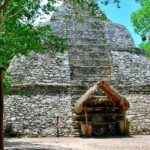
You can climb the following Mayan ruins in Mexico:
El Castillo at Chichen Itza
Pyramid of the Magician at Uxmal
Temple of the Inscriptions at Palenque
Temple of the Warriors at Chichen Itza
Always check local regulations before your visit, as climbing policies may change. These Mayan Temples are available for the public to climb to their peak as of September 2025.
Which Mayan Temples are near Playa del Carmen?
The Mayan Temples near Playa del Carmen include the Tulum Ruins overlooking the ocean, the Coba Ruins, Ek’ Balam, and Chichen Itza.
The Mayan ruins near Tulum and Playa del Carmen also provide access to a wide variety of cenotes that you can visit to cool off after spending time in the sun.
Which Mexico States have the most temples that I can visit?
The states in Mexico with the most temples to visit are:
1) Mexico City
2) Oaxaca
3) Puebla
4) Yucatán
5) Guanajuato
Are there any Mexico Ruins that allow me to tour inside the temple?
Yes, several ruins in Mexico allow tours inside the temples. Notable sites include:
Palenque
Monte Albán
Teotihuacan (some areas may have restrictions)
Verify local regulations and availability before planning your visit.
This list is updated as of September 2025.
Which Mayan temple in Mexico is the most exclusive to visit, and why?
The most exclusive Mayan temple to visit in Mexico is the Temple of the Inscriptions in Palenque.
It is known for its elaborate carvings and the tomb of Pakal the Great, one of Mesoamerica’s most important archaeological finds.
Preservation efforts limit access, making visits more exclusive compared to other sites.
What is the average price range to hire a guide with special access to Mexico ruins?
The average price range to hire a guide with special access to Mexico ruins typically ranges from $150 MXN to $500 MXN per day, depending on the site and the guide’s expertise.
How many Mayan temples are in Mexico?
There are over 4,000 Mayan archaeological sites in Mexico, many of which contain temples, with the most famous being Chichen Itza, Tulum, and Palenque.


Mexico is such a great country. I loved Chichen Itza